

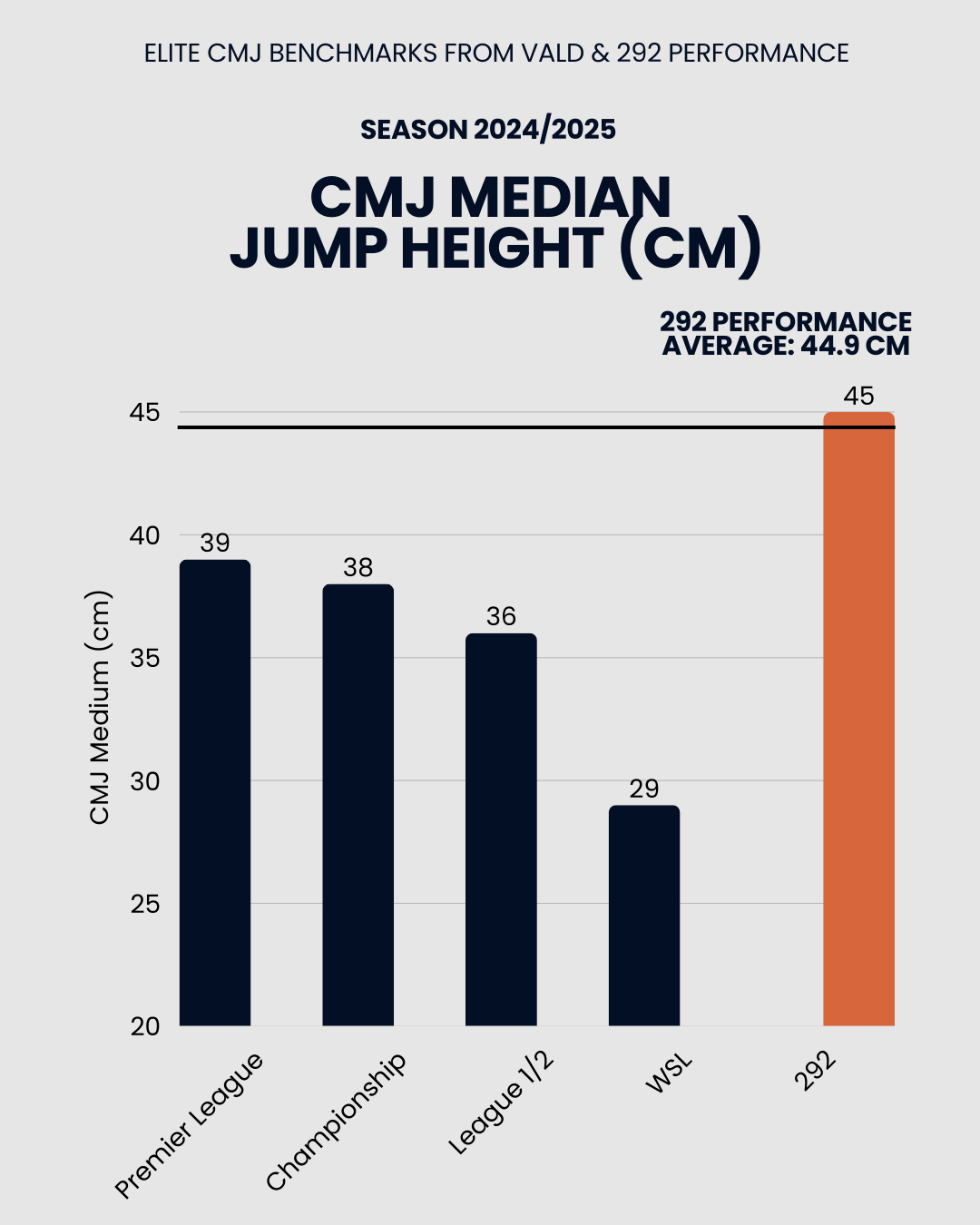
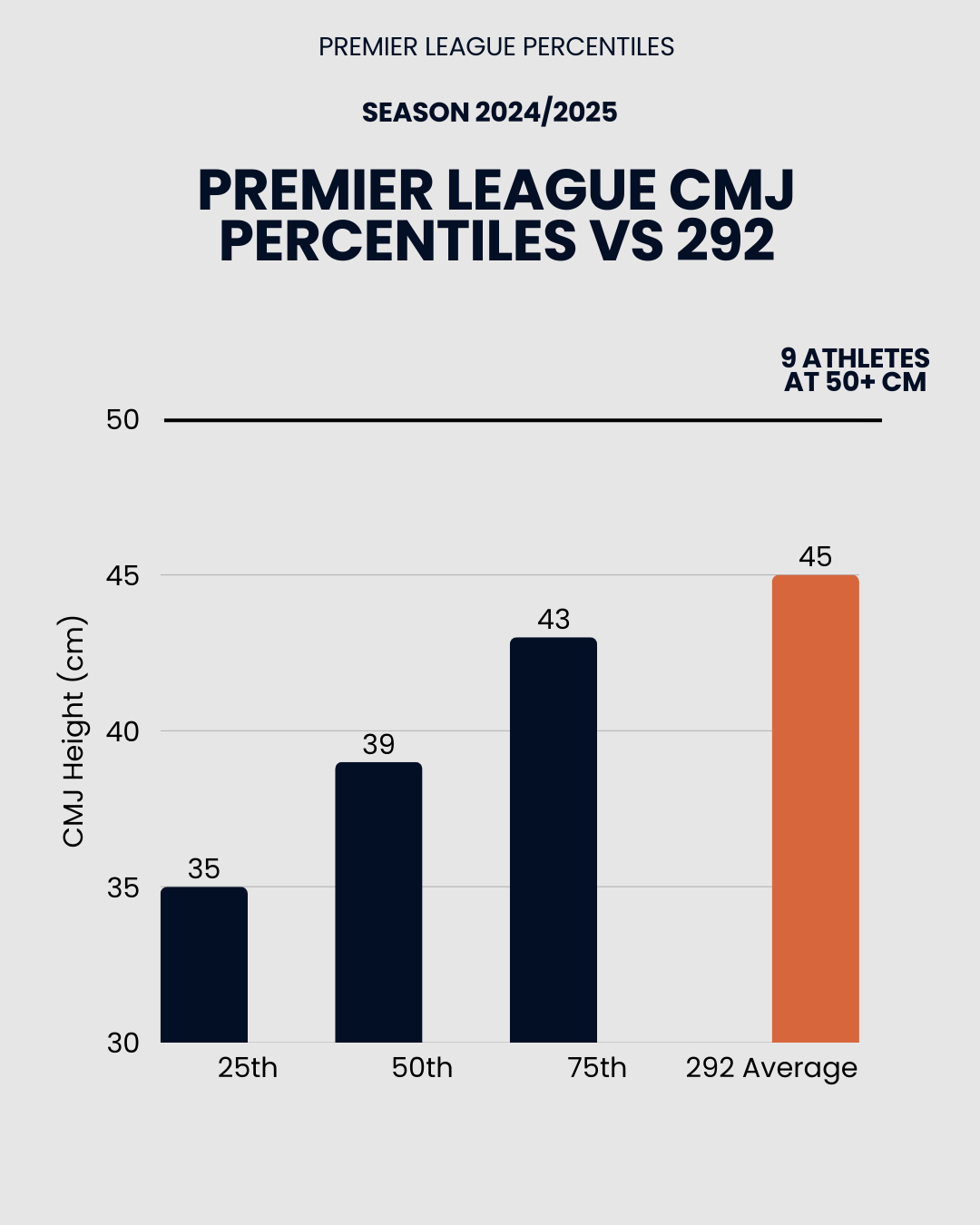
At 292 Performance, the athletes we work alongside have a current average of 44.9 cm, with nine athletes clearing 50 cm. Against league percentiles, that places us above the Premier League 75th percentile at 43 cm.
Two CMJ metrics consistently distinguish Premier League athletes from lower divisions:
Premier League players show clear advantages in both, with EDRFD more than 15% higher than Championship averages. These time-constrained metrics are powerful because they:
Coaching point: If your monitoring relies solely on jump height, you’re missing the qualities that distinguish the top level. CI100 and EDRFD reveal intent, braking control, and readiness.
League-wide data shows the lowest CI100 and EDRFD values early in the week, with peaks typically on Friday. This pattern suggests that when the week is structured well, athletes arrive at match day (assuming Saturday) with improved braking and early-phase concentric qualities.
Coach application for a Saturday game:
Across the league, CI100 and EDRFD tend to climb as the football season progresses, peaking in May. This looks counterintuitive if you view monitoring only through a fatigue lens. Instead, it suggests elite squads adapt positively in reactive and braking qualities when exposure and preparation are well managed.
Coach application:
Set quarterly targets for CI100 and EDRFD, not just jump height. Aim for progressive improvement, not maintenance.
Hamstring strength remains critical. VALD’s league data shows how to normalise eccentric Nordic strength for body mass using allometric scaling. Pair NordBord outputs with sprint metrics using the Quadrant of Boom to flag players at risk because speed is high but eccentric strength is low – or vice versa.
Hip adductor strength trends also matter. Monitoring ADD:ABD ratios through the season gives useful context for sprinting demands and potential groin risk.
