

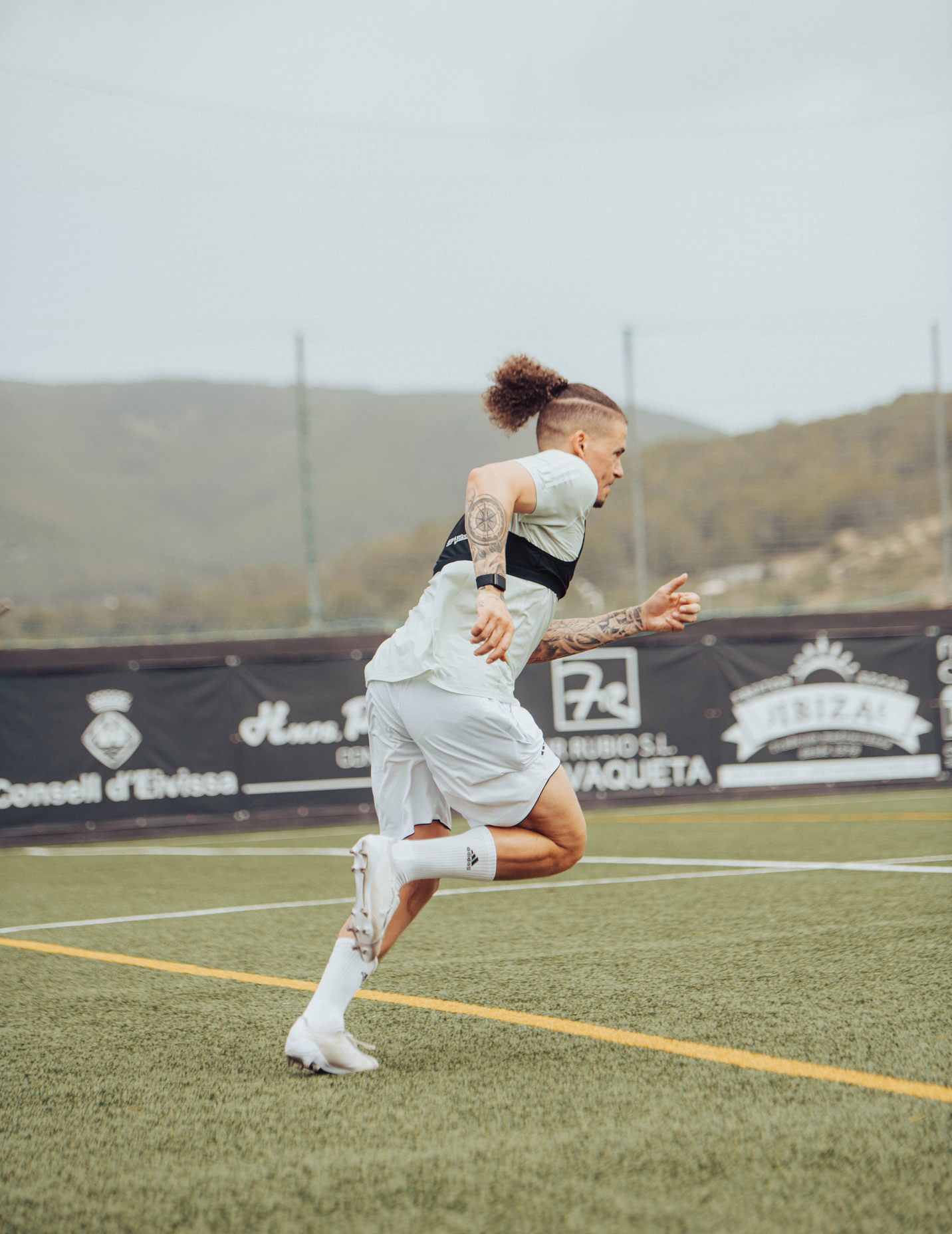
Following recurrent calf injuries, the priority was to restore tissue capacity without reducing sprint performance.
Profiling identified a 31% strength deficit, alongside a mismatch between force production and tissue capacity. The injured limb was absorbing increased load during acceleration, driving repeated breakdown.
Working in full collaboration with Manchester City, we aligned physical capacity with sprint demands: progressively restoring strength while maintaining and advancing sprint exposure, guided by continuous data monitoring.
The outcome was a return to high-speed sprinting without symptoms, reduced deficit, and improved robustness, all without compromising performance output.
This approach demonstrates that rehabilitation can be achieved without regression when root causes are addressed and exposure is maintained.
Across multiple seasons, the athlete experienced recurring calf injuries. Initial 292 profiling identified a clear issue:
Deeper AI biomechanical analysis revealed that, despite this deficit, the athlete was still producing high sprint and acceleration forces.
AI-supported running analysis showed the injured leg was working harder during acceleration, increasing stress on the calf and driving repeated breakdowns of the muscle.
It was a mismatch between force production and tissue capacity.
Full clinical and performance handover from Manchester City, ensuring complete alignment from day one.
The focus: align physical capacity with the demands of sprinting.
AI technology was used to analyse sprint mechanics and guide intervention at every stage.
An integrated performance team delivered the programme:
Collaboration and communication: this was a fully integrated process with Manchester City throughout the Premier League off-season during 2024 and 2025.
Trusted by Manchester City to deliver and communicate at Premier League level.
What the data shows:
Better running mechanics, stronger tissues. All in collaboration with Manchester City.
